
.
Punam Phuyal
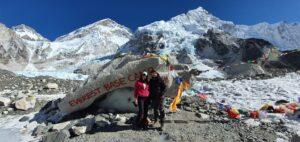

The best time for the Everest Base Camp trek is spring (March – May) and autumn (September – November). This time offers a clear view of mountains, moderate temperatures, and pleasant weather. If you are planning for an Everest trek, then always choose the spring or autumn season to make a lifetime memory in the Khumbu region.
Mountain treks have a strong relation with weather and temperature. The same place seems like heaven in good weather, whereas it will be only fog in bad weather. The experienced guides of Mission Summit Treks, who visit Everest Base Camp more than 15 times a year, always suggest trekking in the spring and autumn seasons. . The weather changes uncertainly on the mountain; thus, selection of the best time is most important for having a good view of the snow-capped peaks.
Rainy days, flight cancellations, few opened hotels, and less visibility are common problems in the offseason. Foggy days, extremely low temperatures in winter, and rainy days of the monsoon season make the trek worse. Everest trekking without a flight is also difficult in summer due to more landslides and muddy roads. Thus, we prefer only the spring and autumn seasons for trekking in the Everest region.
The spring and autumn seasons are the best time for the Everest Base Camp trek.
The months of March, April, and May come under the spring season. It is considered the best time due to the amazing view of mountains during the trek. In March the optimum temperature remains 7°C in the day and -12°C at night. In April, the optimum temperature remains 10°C in the day and -5°C at night. Similarly, during May, the optimum temperature remains 15°C during the day and 0°C at night. Thus, we can choose either March or April or May depending on our body's temperature tolerance. While talking about the best scenery and clear mountain views, we will have a fabulous view throughout the trek. Clear sky, greenery in lower elevations, blooming flowers, and the sparkle of the central Himalayan mountain range make our trek awesome in spring. If we do trekking in late May, it will be affected by pre-monsoon. We will get the best weather from higher elevations like Tengboche, Lobuche, or Gorekshep only. Thus, we suggest doing trekking from mid-March to mid-May.
Table 1: Average temperature in spring season
| Months | The average temperature during day | The average temperature during night |
| March | 7⁰C | -12⁰C |
| April | 10⁰C | -5⁰C |
| May | 15⁰C | 0⁰C |
Comparatively, May is the hottest month of the spring season, while March is the coldest month. Thus, April is most favorable for the EBC trek.
September, October, and November are months that fall in the autumn season. After the end of the monsoon in Nepal, you will not have rainy days. Every day remains pleasant with a clear sky, moderate temperature, and amazing view of the mountain range. The optimum temperatures in the days of September, October, and November remain 17°C, 12°C, and 7°C, respectively. Similarly at night, the optimum temperature remains 3°C, -7°C, and -12°C in September, October, and November, respectively. Almost all tea houses remain open, and favorable weather makes your trekking awesome.
Table 2: Average temperature in autumn
| Months | Average temperature during day | Average temperature during night |
| September | 17°C | 3°C |
| October | 12°C | -7°C |
| November | 7°C | -12°C |
Both spring and autumn are equally good for trekking to base camp. There are some differences regarding the blooming of rhododendron and the season of Everest expeditions. Since spring is the season for peak climbing, the route and hotels remain more crowded as compared to the autumn season.
| Factors | Spring (Mar-May) | Autumn (Sep – Nov) |
| Weather | Pleasant from mid-March to mid-May | Pleasant from mid-Sept to mid-Nov |
| Visibility | clear | Clear |
| Crowds | Very high due to expedition time | high |
| Flowers | Rhododendrons bloom in forests | Normal garden flowers only |
| Photography | best | best |
| Temperature | moderate | Moderate at beginning and decrease in late November |
| Lukla flight | Mostly from Ramechhap | Mostly from Ramechhap |
Winter is unfavorable for the Everest base camp trek; the months of December, January, and February bear extremely low temperatures. Tea houses in higher altitudes remain closed, and unfavorable weather doesn’t support trekking. The Everest region is colder than other parts of the country throughout the year. Thus, it is extremely cold in winter. Thus, it is not good to trek at this time. The major reasons to exclude winter for trekking are:
The summer season refers to June, July, and August. These months have moderate temperature, but heavy rainfall, foggy weather, and cloudy days will ruin our trekking. EBC Trekking is August, june and july is like trekking with rain. The monsoon rain remains active in summer, and we will experience rainy days with clouds and fog surrounding us. It will not let us enjoy the trail and increase the difficulties of EBC trek. The major consequences that occur in the summer season are the following:
Spring and summer are the best times for the Everest Base Camp trek. According to the experienced guides and trekkers of Mission Summit Treks, we can have brilliant trekking during peak season (March, April, May, September, October, and November). Sometimes we may have bad weather even in the best season, but the weather at higher elevations will be clear from morning to midday, which will let us view the amazing landscape. Summer and winter are off-seasons that make trekking more challenging and difficult. Thus, we always suggest choosing spring and autumn for the trekking in the Everest region.
...


